
MAWHIBA Is Building Gifted Minds. Here’s What Saudi Leaders Must Build to Prevent Burnout and Sustain Peak Performance
Feb 12, 2026Saudi Arabia is investing in giftedness at scale. Through MAWHIBA, talent is identified early, nurtured systematically, and prepared for global competitiveness. The discipline, structure, and national intent behind this initiative are impressive. A thought-provoking question is whether we are investing equally in the leadership conditions that sustain those minds.
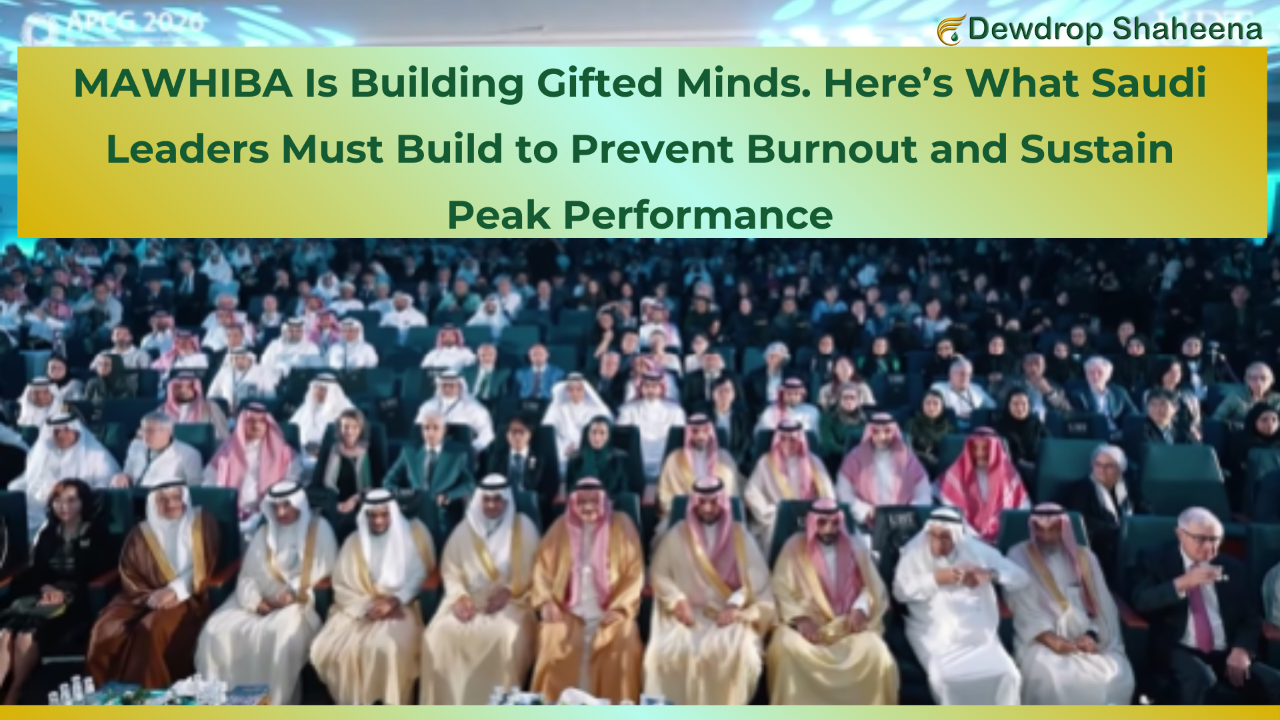
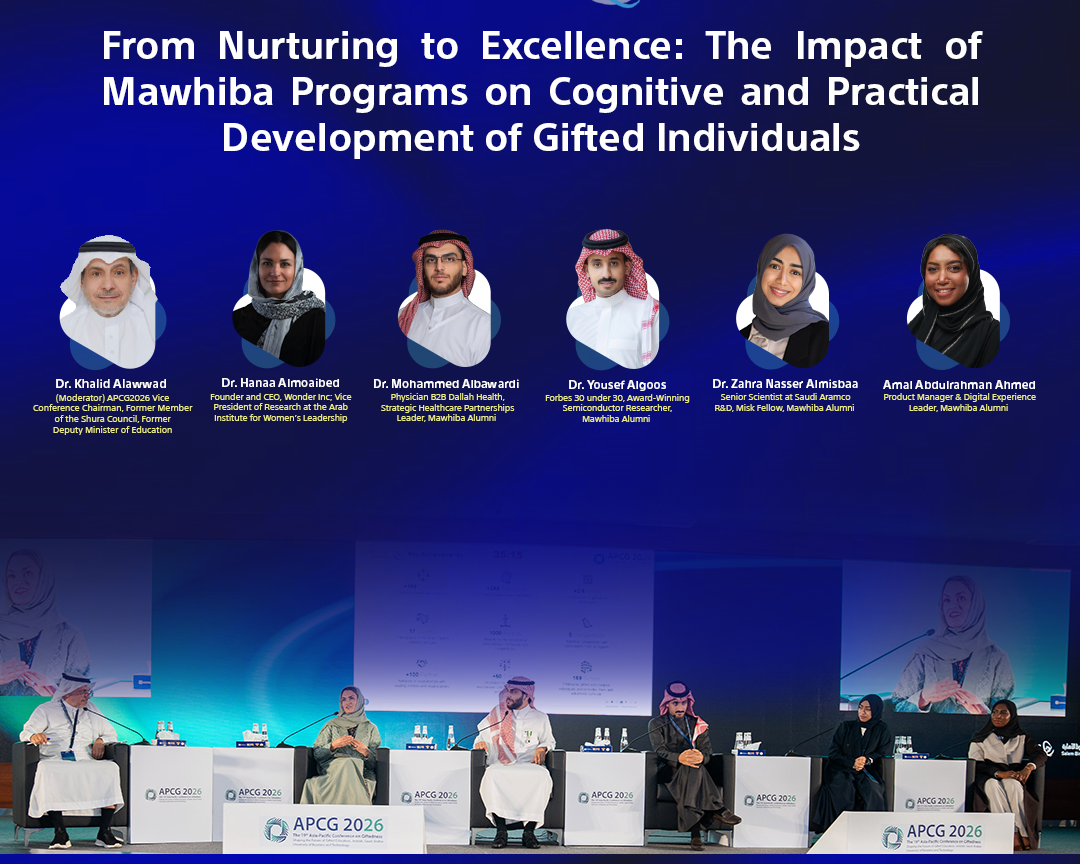
From 7-11 February, I attended APCG2026, 19th Asia-Pacific Conference on Giftedness held at UBT in Jeddah. I met change agents from different corners of the world, listened to global expertise, and witnessed the clarity of national ambition. Yet one experience stayed with me more than any other: MAWHIBA.
When MAWHIBA’s achievements were presented, what struck me was not only the scale, but also the depth and discipline behind it. Giftedness is not being left to chance. It is being identified, nurtured, and structurally supported through national pathways.
This is not simply an education initiative. It is a leadership signal. When a nation invests in gifted minds, leaders inherit a serious responsibility: to sustain excellence under pressure.
A strategic question follows. When gifted, high-potential individuals enter organisations shaped by coordination complexity, governance ambiguity, hierarchical silencing, transformation overload, and recognition breakdown, can they truly prosper?
Because talent alone does not guarantee sustainability. Leadership conditions do.
A Scenario Leaders Must Consider
Imagine a MAWHIBA graduate. Exceptionally capable. Conscientious. Globally competitive. Highly driven.
She enters a working environment where:
• Mandates are unclear. • Decisions are oral and undocumented. • Expertise is overridden by hierarchy. • English dominates the discussion, limiting full participation. • Recognition is inconsistent or politically filtered. • Initiative load exceeds structural capacity.
Will she thrive? Initially, yes. Gifted individuals endure. They overcompensate. They carry responsibility quietly. They deliver beyond their mandate.
But over time, without structural clarity and leadership discipline, excellence becomes exhaustion. Burnout does not begin with weakness. It begins when high performers carry more than the system is designed to sustain.
The Five Leadership Conditions Saudi Leaders Must Build
If MAWHIBA builds gifted minds, leaders across Jeddah and the Kingdom must build five structural conditions.
1. Coordination Discipline
Saudi organisations often operate across multilingual, multicultural, hierarchical environments. Without deliberate coordination architecture, misalignment and rework increase.
Gifted individuals thrive on clarity. Leaders must build:
-
Decision documentation protocols
-
Meeting inclusion rules
-
Explicit mandate clarity
-
Language equity safeguards
Sustainable peak performance requires information flow that includes competence, not just authority.
2. Governance Spine
Vision 2030 acceleration increases initiative density. Without signed charters, decision rights, and escalation thresholds, governance collapses into firefighting.
High-potential professionals do not disengage when systems fail. They absorb the failure.
Leadership must establish:
-
Signed mandate structures
-
Clear ownership matrices
-
Milestone discipline
-
Audit trails for decisions
Without governance clarity, burnout migrates upward and inward.
3. Leadership Operating Maturity
In hierarchical cultures, silence is often mistaken for alignment. But suppressed expertise is a strategic risk.
Leaders must shift from authority dominance to authority stewardship. This requires:
-
Structured consultation norms
-
Protection of dissent
-
Psychological safety routines
-
Feedback that preserves dignity
When competence is silenced, innovation erodes long before metrics reveal it.
4. Recognition Integrity
Recognition breakdown is one of the fastest accelerators of burnout.
When effort becomes invisible, when credit is diverted, when contribution is politicised, gifted professionals disengage internally before they leave physically. Leaders must institutionalise:
-
Transparent attribution norms
-
Recognition tied to contribution
-
Ethical credit discipline
Gratitude is not sentiment. It is a performance stabiliser.
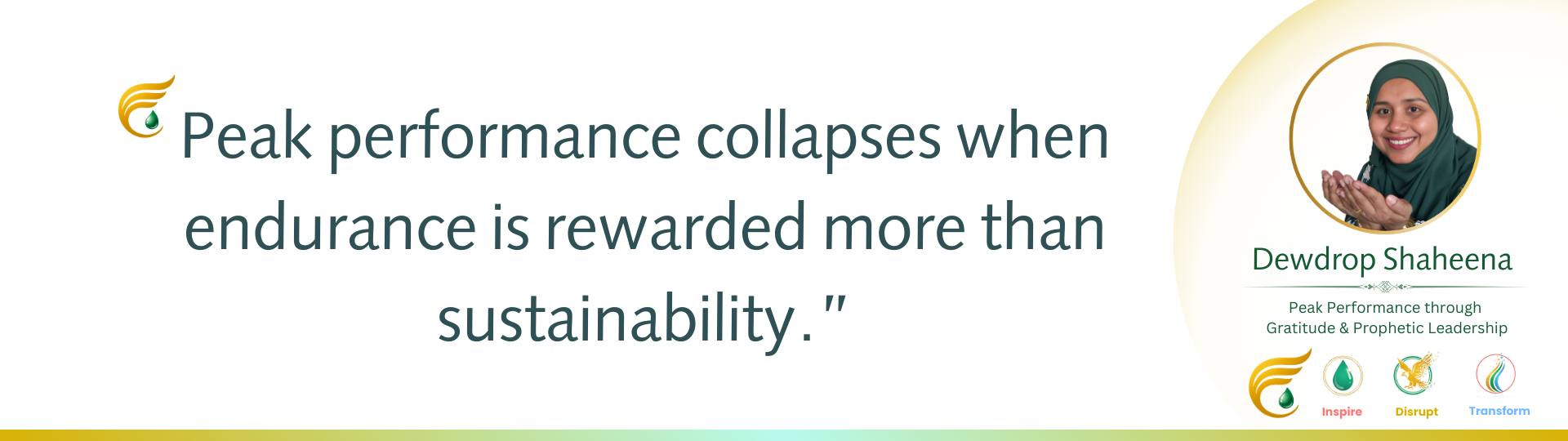
Recognition is not kindness. It is oxygen for sustained peak-performance
~ Dewdrop Shaheena
5. Nervous-System Sustainability
Acceleration without recovery creates cognitive depletion.
When transformation load, localisation mandates, digital adoption, and regulatory shifts converge, middle managers absorb disproportionate strain. Leaders must redesign:
-
Workload-to-capacity alignment
-
Execution rhythm
-
Boundary architecture
-
Sustainable cadence under pressure
Burnout is not a resilience problem. It is a system design problem.
Why This Matters Beyond the Gifted
MAWHIBA focuses on gifted individuals. Leadership must focus on all power holders.
Because individuals with bureaucratic authority, hierarchical superiority, or decision-making rights are often not the most technically gifted, they shape the environment in which gifted individuals operate. This is where leadership becomes the determining factor in whether talent thrives or quietly braces.
Saudi #Vision2030 milestones will not be achieved solely by talent identification. They will be achieved when authority and talent are aligned through systems that reward contribution, protect voice, and reinforce standards with fairness.
This is where gratitude becomes more than appreciation. When leaders recognise effort with clarity and intent, they reinforce what excellence looks like, strengthen morale across the wider team, and prevent silent disengagement. Recognition is not a social gesture in high-performance cultures. It is performance infrastructure.
Prophetic leadership strengthens this alignment under pressure. It teaches disciplined restraint, justice in decision-making, and stewardship over people and outcomes. It restores meaning before escalation and preserves dignity while holding standards.
Amanah in leadership means protecting the conditions that allow excellence to endure, through gratitude-led reinforcement and Prophetic leadership in practice.
A Direct Question to HR, L&D, CEOs and Executive Directors in Jeddah
If a MAWHIBA graduate entered your organisation tomorrow, would your systems amplify her potential — or gradually exhaust it?
Are your coordination norms inclusive? Is governance signed and visible? Is expert voice protected? Is recognition ethically distributed? Is workload aligned with human capacity?
Saudi Arabia is building world-class capability. The responsibility now rests with leadership. Giftedness can be cultivated nationally. Greatness must be sustained organisationally.
Feeling inspired?
Discover how my frameworks can help you turn insight into impact.
